

Choose an option to see quick actions and get help faster.
.svg)
HVAC Company in Rhoadesville, VA
Discover essential HVAC solutions for Rhoadesville homes. From installations to emergency repairs, we ensure comfort and efficiency year-round.
.jpeg)
Keeping your home comfortable year round in Rhoadesville, VA means choosing HVAC service that understands the local climate, building styles, and the common stressors that shorten equipment life. Air flow brings 30-plus years of residential HVAC experience to homeowners across Rhoadesville and surrounding Central Virginia communities, offering full-service heating and cooling solutions: installation, repair and replacement, preventive maintenance plans, emergency repairs, mini-split and heat pump systems, geothermal installations, indoor air quality testing, smart thermostat setup, and comprehensive home energy audits. It describes the problems we solve, how we diagnose and deliver long-lasting solutions, what a typical project looks like, and why timely, certified service matters for your home and budget.
Why targeted, local HVAC care matters for Rhoadesville homes
- Rhoadesville experiences humid summers and chilly winters that make both cooling and heating performance critical. High humidity increases cooling loads and the risk of mold growth in ductwork or attics, while cold snaps stress older furnaces and heat pumps.
- Many homes in the area were built before modern energy codes; they can have undersized ductwork, insufficient insulation, or aging systems that struggle with today’s comfort expectations.
- Seasonal pollen, agricultural dust, and variable humidity affect indoor air quality, making IAQ testing and solutions particularly relevant to local families.
Common HVAC problems homeowners in Rhoadesville face
- Insufficient cooling on humid summer days: reduced airflow, dirty coils, low refrigerant, or undersized equipment.
- Short cycling and frequent repairs: often caused by improper sizing, clogged air filters, or failing components in older units.
- Rising heating bills during cold months: inefficiencies from poor combustion, a failing heat exchanger, or duct leakage.
- Uneven temperatures from poor duct design, zoning needs, or failing thermostats.
- Indoor air quality complaints: high humidity, odors, dust, and allergies influenced by local pollen and older homes.
- Emergency failures during temperature extremes, where response time and proper diagnostics prevent further damage.
Residential HVAC services provided in Rhoadesville, VAAir flow offers a complete portfolio tailored to Rhoadesville homes. Each service includes workmanship backed by manufacturer warranties and maintenance agreement options.
Heating and cooling installation and replacement
- New central air conditioners, heat pumps, and high-efficiency furnaces: system selection is based on load calculations, home layout, insulation levels, and occupant preferences.
- Mini-split systems and multi-zone ductless solutions: an excellent option for room additions, older homes without ductwork, or targeted comfort in basements, sunrooms, and garages.
- Geothermal systems: a long-term, highly efficient alternative for homeowners planning major upgrades or new construction in properties suited to ground loop installations.
- System sizing and selection: we use industry-standard Manual J load calculations to recommend the right capacity, and Manual D for ductwork, ensuring correct sizing to avoid short cycling or inadequate performance.
Repair, diagnostics, and emergency repair
- Comprehensive diagnostics: visual inspections, airflow measurements, electrical testing, refrigerant checks, and system performance analysis to identify root causes rather than surface symptoms.
- Common repairs: compressor or capacitor failure, refrigerant leaks, ignition or flame sensor problems, blower motor replacement, control board faults, and thermostat malfunctions.
- 24/7 emergency repair availability: for situations such as no heat in freezing weather, complete AC failure during heat waves, or safety-related issues like suspected gas leaks or cracked heat exchangers. Emergency triage prioritizes safety and temporary stabilization until full repairs are completed.
Preventive maintenance plans and tune-ups
- Seasonal tune-ups for cooling and heating systems: filter inspection and replacement, coil cleaning, lubrication, electrical tightening, refrigerant verification, safety control checks, thermostat calibration, and airflow balancing.
- Maintenance agreements: scheduled visits to extend equipment life, reduce energy costs, and lower the likelihood of unexpected breakdowns. Agreements can include priority scheduling, discounted repair labor, and documented service history.
Indoor air quality testing and solutions
- Testing services: particulate counts, humidity monitoring, VOC screening, and carbon monoxide checks where combustion appliances are present.
- IAQ improvements: high-efficiency filtration (MERV-rated options), whole-home dehumidification, UV germicidal lights, ventilation upgrades (ERV/HRV), and targeted solutions to reduce allergens and odor control.
- Recommendations tied to Rhoadesville conditions: balancing humidity for comfort and mold prevention during humid months while managing pollen and dust seasonally.
Smart thermostat installation and system integration
- Smart thermostats from Energy Star-recognized manufacturers integrated into existing systems for zoning and energy savings.
- Setup includes Wi-Fi connectivity, scheduling, remote diagnostics, and firmware updates where appropriate, plus guidance on how to interpret and act on usage reports to reduce energy consumption.
Home energy audits and efficiency recommendations
- Whole-home energy audits: blower door testing, infrared inspection, duct leakage testing, and a review of insulation, windows, and ventilation.
- Actionable recommendations: from sealing duct leaks and insulating attics to equipment upgrades or control improvements that prioritize cost-effective measures first.
- Financing and rebate coordination: identifying possible local utility rebates, manufacturer incentives, or federal tax credits for qualifying heat pumps or geothermal installations to improve payback on upgrades.
Geothermal systems and heat pump installations
- Geothermal installations: ground loop design tailored to property size and soil conditions, with emphasis on long-term operating efficiency and reduced utility bills.
- Heat pump systems: modern cold-climate heat pumps and hybrid systems that perform efficiently in Virginia’s variable winters while providing excellent cooling in summer.
- Benefits for Rhoadesville homes: lower total cost of ownership over the life of the system, reliable performance with proper installation, and eligibility for energy-efficiency incentives in many cases.
How diagnostics and service work what to expect on the job
- Step 1: Initial assessment and system review. Technicians arrive with training and tools to visually inspect equipment, review past maintenance history, and ask targeted questions about comfort issues, noise, odors, or bill increases.
- Step 2: Performance testing. This includes measuring supply and return temperatures, airflow across the coil, refrigerant pressures, electrical draws, and combustion safety where applicable.
- Step 3: Root cause analysis. A clear explanation of findings, differences between short-term fixes and long-term solutions, and documentation of system health and efficiency.
- Step 4: Repair or replacement recommendation. If repairable, the technician explains expected life extension and cost-effectiveness. If replacement is the better option, they show how a properly sized, high-efficiency system will perform and the expected energy savings.
- Step 5: Post-service verification. After repairs or installation, systems are tested for performance, safety, and controls integration. Final checks include thermostat programming and homeowner orientation on new features.
Repair versus replacement: how decisions are made
- Age and expected remaining life. Furnaces and air conditioners typically have service lives; when major components fail near the end of expected life, replacement often makes more economic sense.
- Cost of repair relative to equipment value. Replacing an aging system after repeated expensive repairs usually provides better long-term reliability and comfort.
- Efficiency improvements. Upgrading to a modern, high-efficiency system can reduce monthly operating costs enough to justify the investment, especially when combined with available rebates or tax incentives.
- Home comfort goals. If adding zones, improving air quality, or reducing noise is a priority, replacement with targeted technologies (mini-splits, heat pumps, or geothermal) may be the best route.
Maintenance plan details and what is included
- Typical tune-up checklist:
- Replace or recommend filter changes and verify correct filter type and size.
- Clean evaporator and condenser coils for optimal heat transfer.
- Check refrigerant levels and inspect for leaks if performance is below standard.
- Test and tighten electrical connections; measure motor amperage.
- Inspect belts, bearings, and blower assemblies for wear.
- Test safety controls, ignition systems, and flue integrity on combustion equipment.
- Verify thermostat calibration and basic control logic.
- Assess condensate drains for clogs and proper trapping.
- Benefits of regular maintenance:
- Reduced operating costs and improved efficiency.
- Fewer emergency repairs and longer equipment life.
- Better indoor air quality through consistent filtration and humidity control.
- Documentation of service history, which helps maintain warranties and home resale value.
Warranties, maintenance agreements, and certifications
- Certifications: NATE-certified technicians and Energy Star-recognized products and practices provide assurance of quality installation and service standards.
- Warranty handling: manufacturer and workmanship warranties are honored, and proper maintenance documentation is provided to support warranty claims.
- Maintenance agreements: typically include scheduled inspections, priority scheduling for service calls, and discounts on parts or labor, which together protect your investment and provide predictable service.
Financing and rebate options explained
- Financing options: many homeowners have access to manufacturer financing, third-party consumer financing, or home improvement loan programs that make equipment upgrades manageable over time.
- Rebates and incentives: local utility programs, state-level incentives, and federal tax credits can reduce the upfront cost of high-efficiency heat pumps and geothermal systems. Eligibility depends on equipment, installation details, and program rules.
- Coordinated assistance: technicians can identify potential rebate programs and the typical documentation required so homeowners can evaluate net cost and payback.
Emergency response and service area specifics
- 24/7 service availability: emergency coverage is an important component for Rhoadesville homes, particularly during extreme heat or cold where system failure can pose safety or health risks.
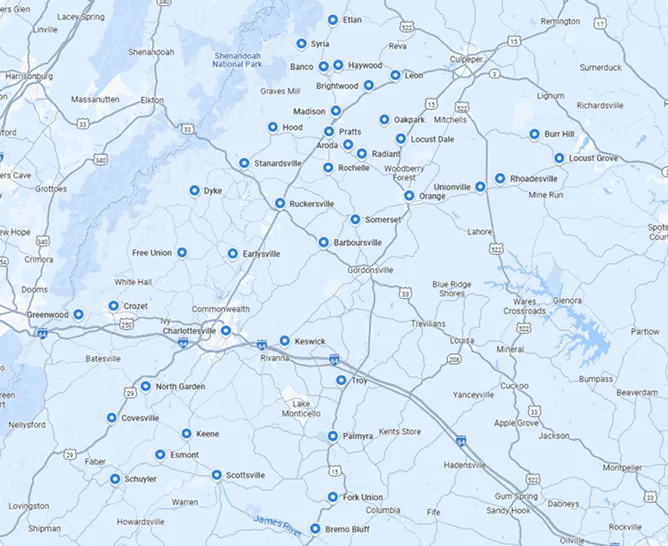
- Typical response times: regional experience helps predict arrival windows for urgent calls within Rhoadesville and nearby Central Virginia communities, with dispatch protocols that prioritize safety issues.
- Local knowledge: familiarity with local building practices, attic and crawlspace layouts, and prevailing environmental factors enables faster, more accurate diagnostics and durable repairs.
Indoor air quality and health-related considerations
- Humidity management: whole-home dehumidification helps prevent mold growth and improves comfort during hot, humid summers common in this region.
- Allergen reduction: high-efficiency filtration and targeted ventilation upgrades reduce pollen and dust infiltrating older homes.
- Combustion safety: carbon monoxide testing, combustion analysis, and heat exchanger inspections are critical in homes with gas furnaces or water heaters.
Energy audits and long-term efficiency planning
- Prioritizing improvements: energy audits identify the highest-return upgrades first, whether that is sealing duct leaks, adding attic insulation, or replacing an inefficient HVAC unit.
- Measured results: blower door and thermal imaging tests quantify air leakage and insulation gaps to make clear where upgrades will improve comfort and lower bills.
- Planning for upgrades: audits provide a roadmap that aligns with homeowner budgets and long-term goals, including staged upgrades to distribute cost over time while capturing maximum efficiency gains.
Why proactive HVAC care saves money over time
- Preventive maintenance reduces the frequency and severity of emergency repairs, keeps systems operating near rated efficiency, and delays full replacement through small, targeted repairs.
- Proper system sizing and correct installation are the single biggest factors in realizing rated efficiency and comfort, avoiding higher-than-expected operating costs and premature failures.
- Documented service and maintenance help retain value in the home and make replacements more cost-effective when timed with incentive programs.
What homeowners should prepare for on service day
- Clear access to the equipment and thermostat area for inspection and testing.
- A basic summary of recent issues, noise descriptions, or comfort complaints to help technicians focus diagnostics.
- Awareness that some repairs may require follow-up visits for parts, especially for older systems where components are no longer stocked readily.
Q: Common questions homeowners askQ: How do I know whether to repair my existing system or replace it?
A: Consider the system age, frequency and cost of recent repairs, efficiency loss, and your comfort needs. If the system is near or past its expected life, requires major component replacement, or cannot meet comfort and efficiency goals, replacement is often more economical long term. A technician can provide a comparison of repair cost versus projected savings from replacement.
Q: Will a smart thermostat really reduce my energy bills?
A: When programmed correctly and combined with a well-maintained system, smart thermostats can optimize setpoints, reduce wasted runtime, and provide insights into usage patterns. Savings vary by home and occupant behavior but are typically better when paired with proper maintenance and efficient equipment.
Q: Are heat pumps reliable in Virginia winters?
A: Modern heat pumps, especially cold-climate models, perform efficiently in Central Virginia winters. In many homes, heat pumps now provide both reliable heating and cooling with remarkable efficiency. For very cold conditions, some installations use a hybrid approach with a furnace backup.
Q: What is the difference between mini-splits and central air?
A: Mini-splits are ductless systems that provide zoned heating and cooling directly to specific rooms and are ideal where adding ductwork is impractical. Central air uses ductwork to distribute conditioned air throughout the home. Choice depends on retrofit constraints, zoning needs, and comfort goals.
Q: How often should I schedule maintenance?
A: At minimum, annual inspections and tune-ups are recommended: one for cooling systems before summer and one for heating systems before winter. Maintenance agreements often include both seasonal visits and priority service.
Q: Do you handle permit and code compliance for major installations?
A: Proper installations comply with local codes and may require permits. Technicians document work to meet code requirements and support warranty and rebate documentation.
Q: Can an energy audit show immediate savings opportunities?
A: Yes. Audits often reveal low-cost fixes sealing duct leaks, adjusting insulation, or correcting thermostat issues that yield immediate comfort and bill reductions before larger investments are considered.
Q: How quickly can I get service for a failing system?
A: Response time depends on current workload and the nature of the issue. Emergency situations that risk safety or health receive priority triage, while non-emergent repairs are scheduled based on availability.
Our Service Process
A Hassle-Free Service Experience
01
Consultation & Diagnosis
We start by listening to your needs and performing a thorough diagnosis of your system to recommend the best solution.
02
Transparent Quoting
We provide a clear, upfront estimate with no hidden fees, so you know exactly what to expect.
03
Expert Service & Follow-Up
Our factory-trained technicians complete the work to the highest standards, and we follow up to ensure your complete satisfaction.
testimonials
What Our Customers Are Saying
Our customers consistently praise our exceptional service and attention to detail, making us a trusted choice for all your HVAC needs.
where we operate
Service areas